
What rope access actually is.
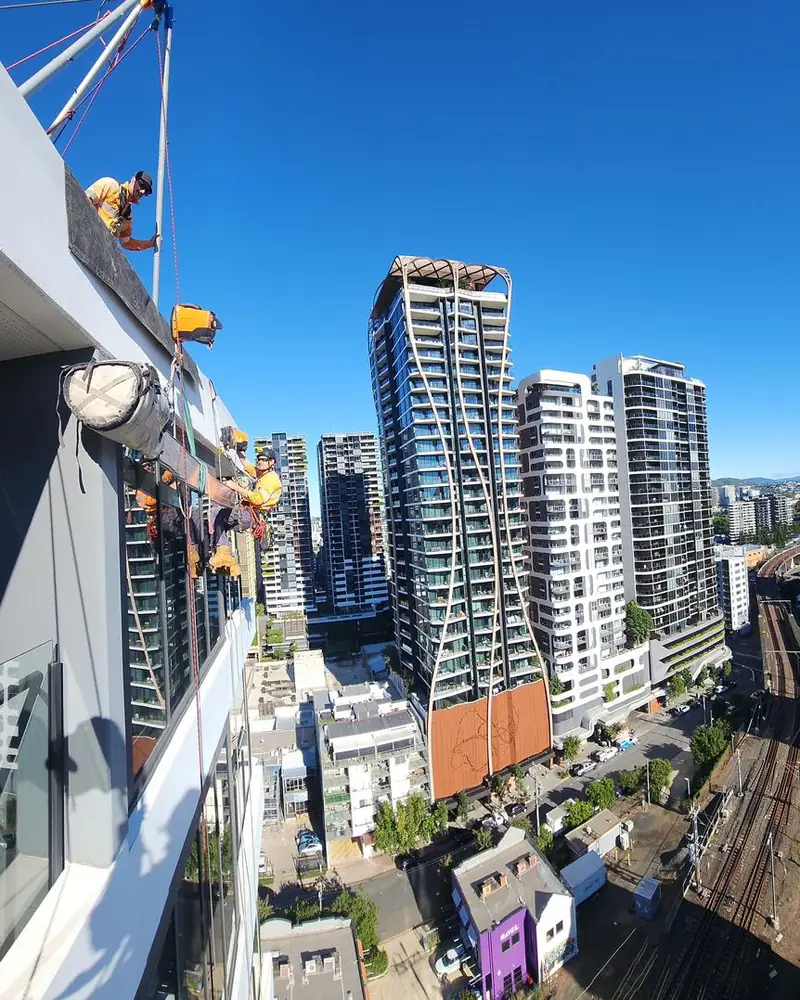
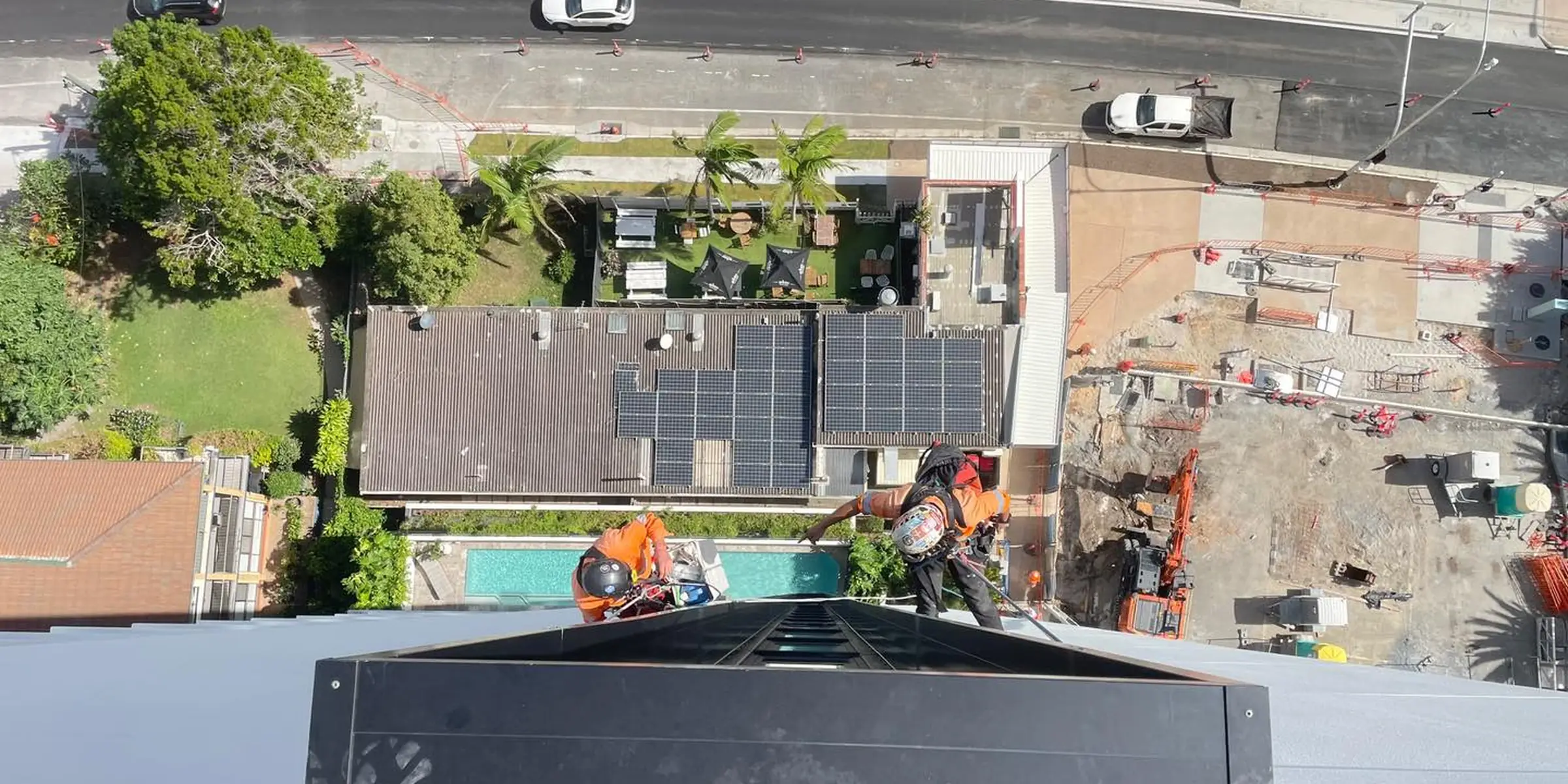
Rope access is a way of putting a skilled tradesperson exactly where the work is, using two independent ropes instead of a structure built up from the ground. One line carries the technician, the second is a backup, and both are anchored and checked independently.
The important part is the second half of that sentence. Getting someone to the face of a building is the easy bit. What matters is whether the person hanging there can weld, seal, glaze, inspect a facade properly, or diagnose where water is actually getting in. Konstruct is a trade contractor that uses rope as its access method, not an abseiling outfit that subcontracts the trade.
When rope access is the right call.
It is the right method when the work is intermittent, spread across a facade, or high above an occupied building. It suits inspection, targeted repair, sealing, panel replacement, and maintenance rounds. Setup takes hours rather than the days or weeks a scaffold needs, and the building stays in use underneath.
It is the wrong method when a crew needs a working platform for weeks, or has to move heavy material to the same face over and over. We will tell you that rather than sell you rope for a job that wants scaffold. If you want the full comparison, we wrote one: rope access vs scaffolding vs EWP.
What we do once we are on the rope.
Rope is the access. These are the trades it delivers:
- Glazing: high-rise panel replacement, installation, and sealing
- Cladding: installation, repair, and compliance inspection
- Facade remediation: concrete repair, sealing, and protective coatings
- Water leak detection: tracing ingress back to the actual entry point
- Inspections and reports: photographic condition surveys and defect registers
- Height safety: anchor points, static lines, and fall arrest systems
- Rigging and signage lifting: moving awkward loads where a crane cannot reach
- Industrial and emergency response: silos, towers, plant structures, and 24/7 make-safe
Who does the work.
The recognised standard for rope access competency is IRATA, which certifies technicians at Levels 1 to 3 with logged working hours required between each grade. Level 3 is the supervisor grade and carries rescue responsibility on site, which is why a compliant team is led at that level rather than simply staffed with certified people.
Konstruct runs an IRATA-certified crew led at Level 3. On top of the access qualification, the company is a QBCC-licensed contractor and is certified to ISO 9001, ISO 14001, and ISO 45001 by Equal Assurance, covering quality, environmental, and safety management. Those two things answer different questions: one says the crew can get there safely, the other says the business can be trusted with the construction work and the paperwork behind it.
Inspection and building maintenance rounds.
A lot of rope access work is not a single repair. It is a recurring look at a building: facade condition, sealant life, cladding fixings, drainage, and the anchor systems the next contractor will clip into. That work produces a photographic record and a defect register a body corporate or asset manager can actually budget from, rather than a verbal summary.
Where a survey turns up something urgent, the same crew is already on site and licensed to fix it. See inspections and reports.
How to choose a rope access contractor.
Worth asking any company you approach, including us:
- Who holds the trade licence? Access certification is not a construction licence. Ask who is performing the actual work and what they are licensed to do.
- Is the team led at IRATA Level 3? Rescue capability on site is a Level 3 responsibility, not an optional extra.
- What does the insurance cover at height? High-risk work needs cover written for it. A general contractor policy often is not.
- What do you get at the end? Photographs, a report, and a defect register, or an invoice and a verbal all-clear.
- Who talks to the building? Occupied towers need someone managing tenant notice, exclusion zones, and access windows.
Where we work.
Core service area is Brisbane, the Gold Coast, and Queensland more broadly, with the crew mobilising Australia-wide for major projects and shutdowns.
Common questions.
What is rope access?
Rope access is a method of getting a technician safely to a work position using two independent ropes: a working line and a backup line. It comes out of industrial climbing and caving, and it is now the standard way to reach the outside of a tall building without building a structure to stand on. The technician is the access system, so the setup is measured in hours rather than days.
Is rope access cheaper than scaffolding?
For most inspection, repair, and maintenance work it costs less, because the bulk of a scaffold quote is erection, hire, and dismantle rather than the trade work itself. Scaffolding wins where the job needs a working platform for a long period, or where crews need to carry heavy materials to the face repeatedly. We will say so when that is the case.
What qualifications do rope access technicians hold?
The internationally recognised standard is IRATA, which certifies technicians at Levels 1 to 3 with logged hours required between each. Level 3 is the supervisor grade and carries rescue responsibility. Konstruct runs an IRATA-certified crew led at Level 3, and holds QBCC licensing for the construction work performed once the technician is in position.
Do you need to close the building or the footpath?
Usually not. Rope access work is contained to the drop zone and the anchor position on the roof, so tenants keep using the building and ground-level disruption is limited to a small exclusion area beneath the work. This is the main reason occupied towers and operating sites choose it.
What happens if the weather turns?
Wind is the limiting factor rather than rain. Work stops when wind at height exceeds safe limits for the task, which is why programmes are built with weather contingency rather than a single fixed date. We monitor forecasts across the drop and reschedule affected days rather than pushing a crew into marginal conditions.
Do you work outside Brisbane?
Yes. Brisbane, the Gold Coast, and regional Queensland are the core service area, and the crew mobilises Australia-wide for major projects and shutdowns. Travel and accommodation are quoted separately for work outside the south-east.