
What we do.
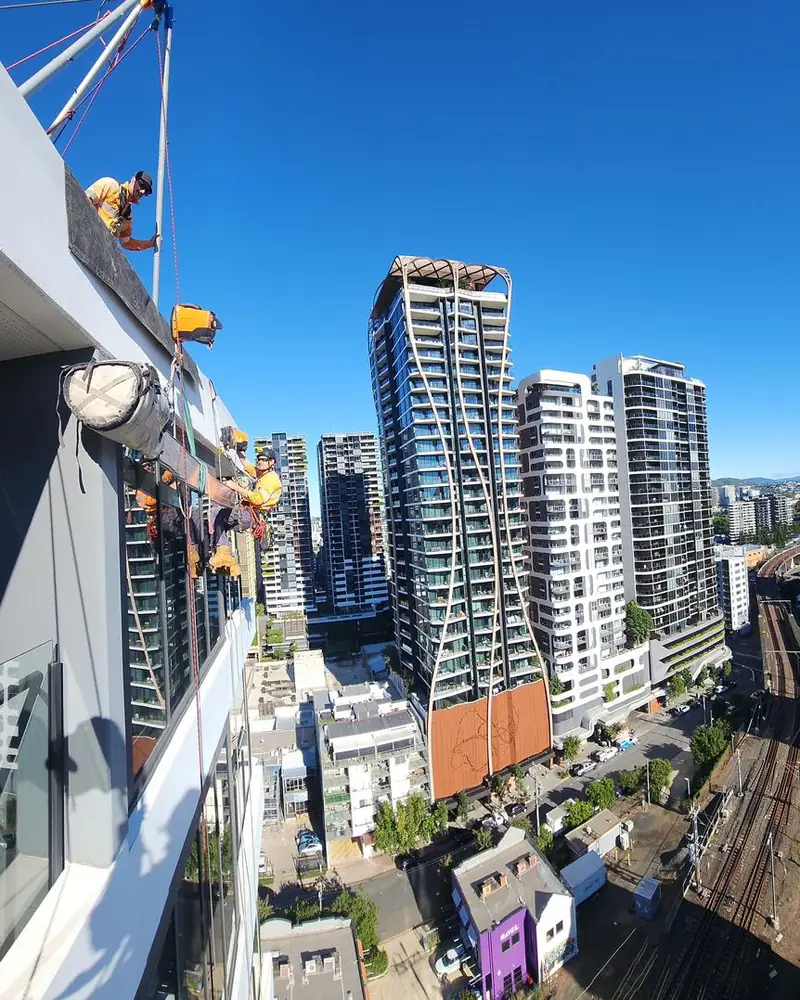
Water leaks are the most common reason a building manager picks up the phone. They’re also the most over-diagnosed and under-fixed. Internal investigation guesses at the source, the “fix” doesn’t stop the leak, and the same call comes in two months later. Konstruct works the building from outside, traces the actual point of ingress under controlled testing, and completes the repair in the same mobilisation.
Where leaks come from.
Curtain wall and façade glazing
Failed perimeter sealant, gasket degradation, mullion joint failure, IGU edge seal breakdown. Water enters at one elevation and tracks down internal cavities before appearing inside. The visible damage rarely points to the source.
Windows and punched openings
Sill flashings, head flashings, frame-to-substrate gaps, weep hole blockages. Older stock often has multiple contributing failures at once.
Roofline and parapet
Roof-to-wall junctions, parapet cap failures, expansion joint breakdown. These show up as wet ceilings on the top floor, but the source might be a parapet metres away.
How we trace it.
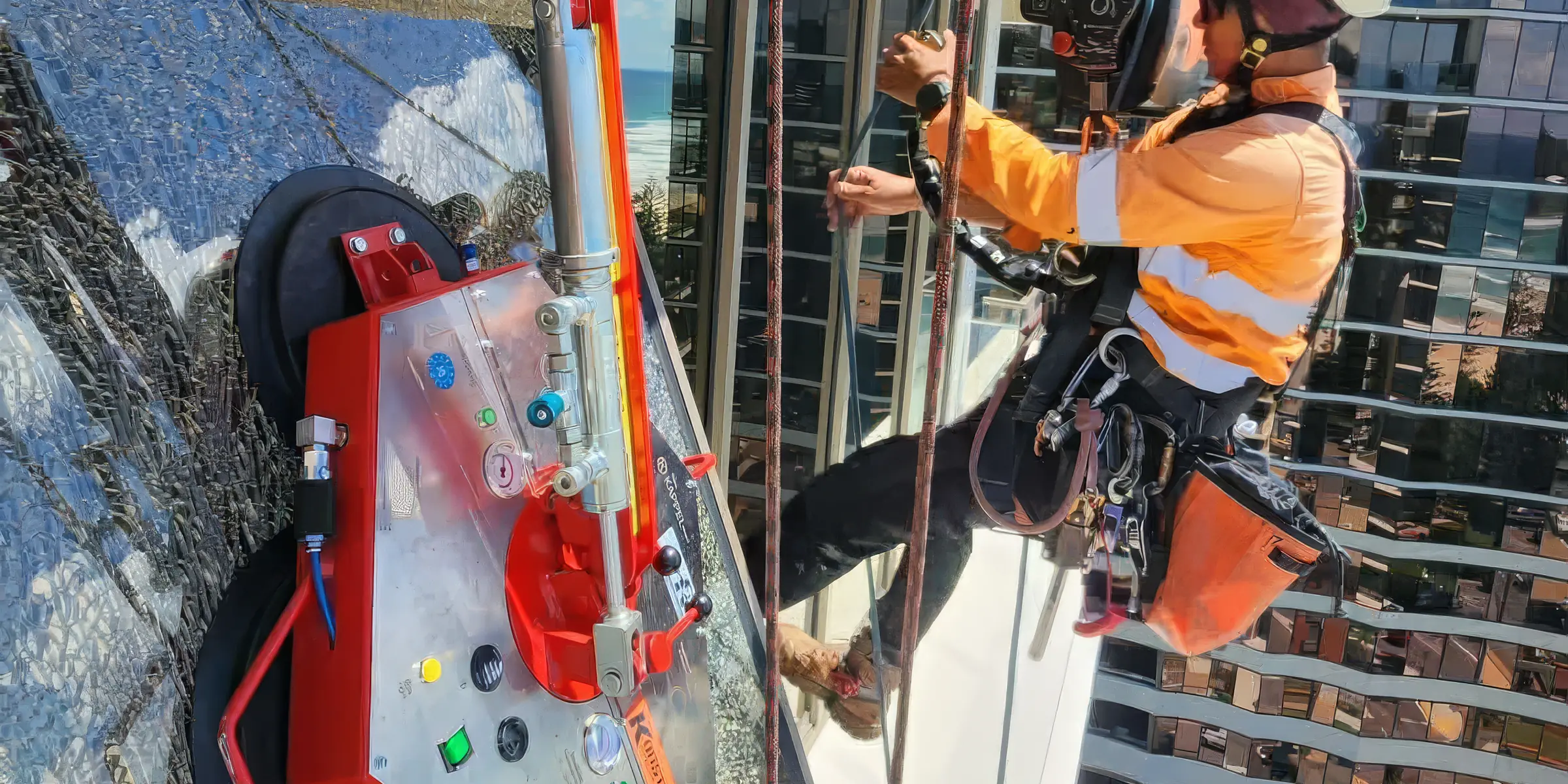
Site walk first, inside and outside the building, to map the symptom and shortlist the likely sources. Then controlled water testing on the façade from rope: starting at the lowest probable source, working upward, isolating each candidate until the source is confirmed. The method is methodical and the answer is provable, not a best guess.
What it includes.
- Site walk and symptom mapping
- Controlled water testing from rope
- Photographic record of the failure point
- Written report suitable for insurance / strata records
- Repair completed in the same mobilisation where possible
- Coordinated glazing or façade remediation when the scope warrants it
Pairs with.
Leak detection almost never travels alone. It pairs with glazing replacement when the source is IGU seal failure, with façade remediation when the source is concrete or sealant joint breakdown, and with building inspections when the leak surfaced a broader condition issue worth documenting.
Common questions.
Why is finding a leak so hard?
Water rarely enters a building where it appears. A wet ceiling on level twelve might trace back to a failed sealant on level fourteen, water tracking down the inside of a mullion before exiting. Diagnosis means working the façade from outside under controlled water testing, something rope access does cleanly that internal-only investigation can’t.
Do you do the repair as well, or just diagnose?
Both. The whole point is one crew through the full job: diagnose, repair, sign off, without handing off to a separate trade partway through. Most repairs are sealant replacement, IGU swap, flashing rework, or coordinated glazing work. Where the cause is more structural we’ll bring it under façade remediation scope.
How quickly can you respond if water is actively coming in?
Same day for emergency callouts. Call 07 2111 7202. The line is answered 24/7 for water ingress events. We’ll get someone on site, isolate the source, and stop the active ingress before scoping the permanent repair.
Do you provide a written report for insurance?
Yes. Photographic record of the failure point, the test method used to confirm it, and the repair completed. Suitable for insurance claims and strata committee evidence.