
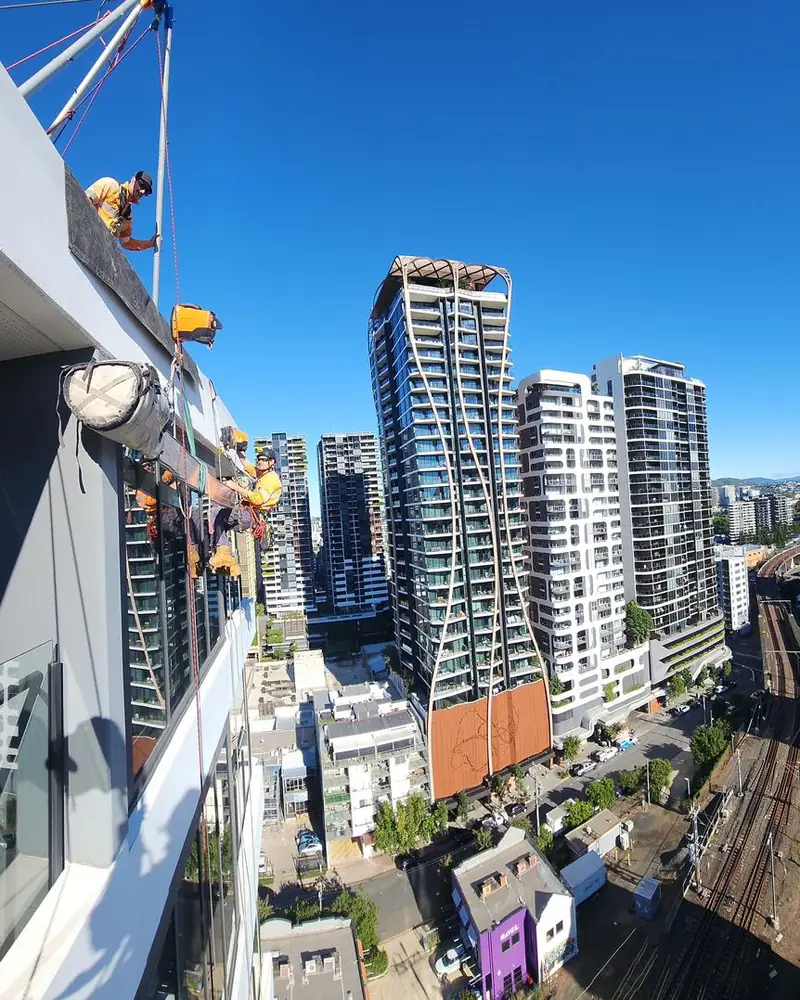
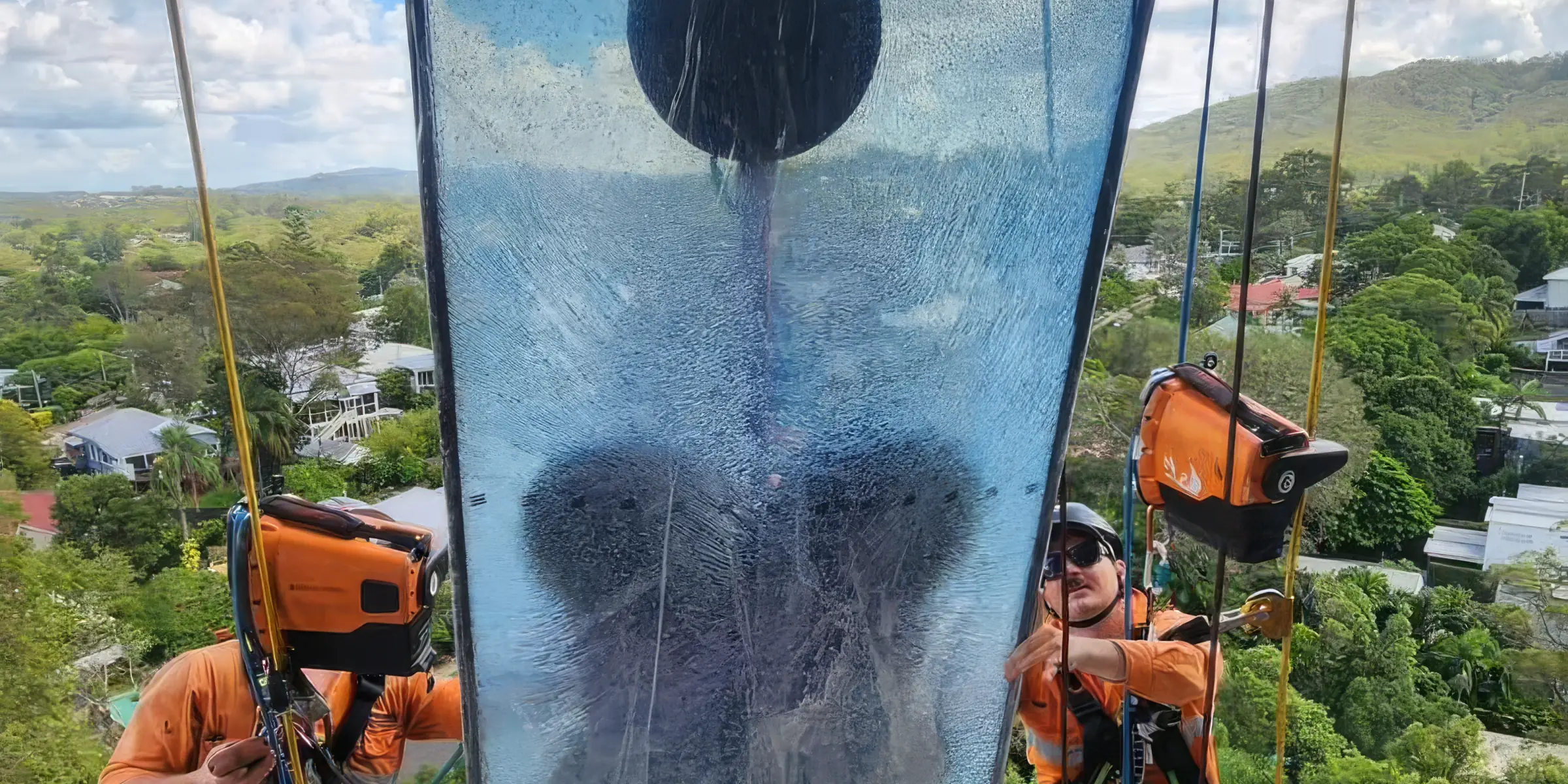
What we respond to.
Anything at height where leaving it until morning makes the damage, or the risk, worse. Water actively coming in through a curtain wall. Façade panels that have come loose. Broken glazing that’s a falling-object hazard. Signage about to detach. Compromised height safety on a building that needs to be operational the next day.
How it works.
1. Call the line
07 2111 7202, answered 24/7. We triage on the phone, get the right kit and crew moving, and give you a realistic on-site time before the call ends.
2. Make it safe
First mobilisation stops the active problem: isolate the hazard, stop the ingress, secure the loose element.
3. Scope the permanent fix
Once safe, we scope the actual repair as a follow-up job under façade remediation, glazing, or water leak detection.
What it costs.
- Callout charge reflects the genuine difference between a planned mobilisation and 2 a.m. response, quoted on the phone, no surprise invoicing
- Brisbane and Gold Coast: routine response, no travel uplift beyond the after-hours premium
- Regional Queensland: scoped on the call
Common questions.
What counts as a rope-access emergency?
Active water ingress flooding tenants, façade panels or glazing that pose a falling-object hazard, broken signage at risk of detaching, anything where leaving it until morning makes the damage worse. If you’re not sure, call. We’ll triage on the phone.
How fast is "24/7" in practice?
Calls are answered around the clock. For Brisbane and Gold Coast, on-site response is typically within hours of the call. Regional Queensland depends on the location, but we’ll give you a real number on the phone, not a vague reassurance.
Do you charge a premium for after-hours?
After-hours emergency response is priced transparently: there’s a callout cost reflecting the genuine difference between a planned daytime mobilisation and a 2 a.m. response. We’ll quote it on the phone, not surprise you afterward.
Will you do a permanent repair or just stop the immediate problem?
First mobilisation is about stopping the active issue: make the building safe, stop the ingress, isolate the hazard. Permanent repair is usually scoped as a follow-up under façade remediation, glazing, or water leak repair.