
On most high-rise façade jobs, the access method is the biggest single variable on the quote. The repair itself, a failed pane, a leaking joint, a spalling soffit, is often a few hours of trade work. Getting a qualified person safely in front of it is what you are actually paying for, and the method chosen to do that can move the price by a factor of several times.
Konstruct runs rope access crews, builds scaffold, and works with EWPs and cranes where they earn their place. So this guide has no method to sell. It is the same reasoning we walk building managers through when we scope a job, written down.
The three methods, in plain terms.
Rope access
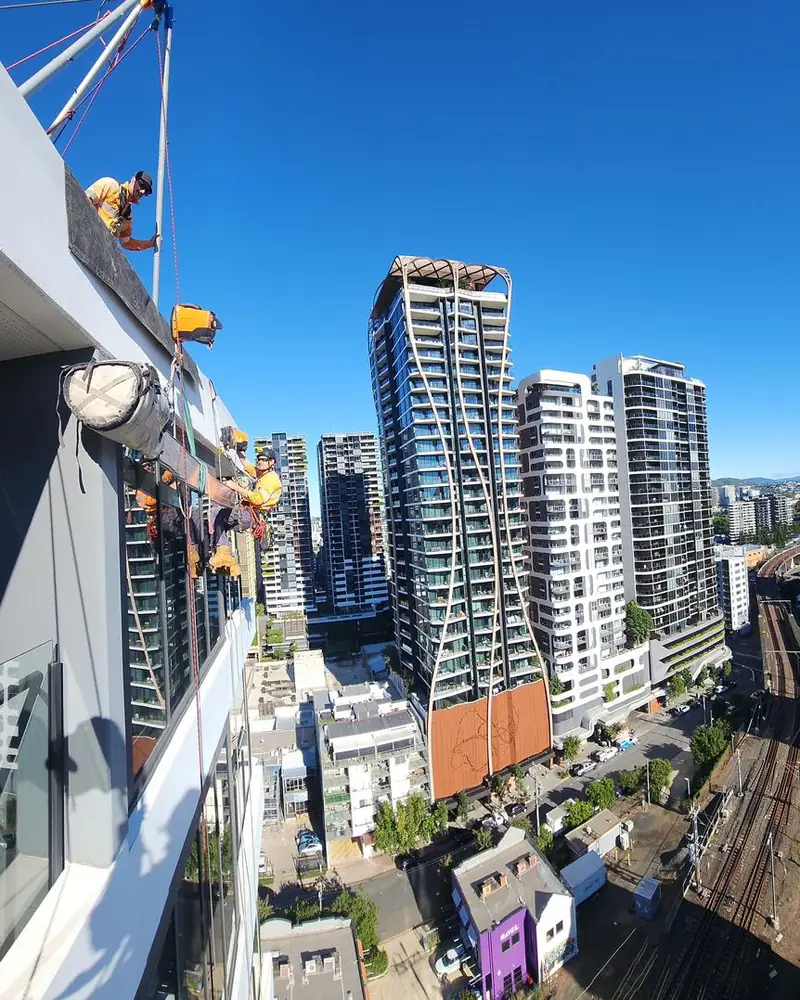
Technicians work the building from above on engineered two-rope systems, a working line and an independent backup line, under the IRATA training framework. There is no structure to build and almost no ground footprint. The crew arrives, rigs anchors, and is on the wall the same morning.
Scaffolding
A fixed working platform, built up from the ground or cantilevered off the structure. Swing stages, the suspended platforms you see on tower façades, sit in the same family. Scaffold takes real time and money to erect and dismantle and occupies the ground beneath it, and in exchange gives you something nothing else does: a stable platform that multiple trades can work from for months.
EWPs
Elevated work platforms, boom lifts and scissor lifts, put a machine on the ground and a basket in the air. They are quick to mobilise and simple to run, provided the machine can stand where it needs to stand and the work sits within its reach.
What actually decides it.
Six factors settle almost every access decision we see:
- Duration and spread of the work. Weeks of work concentrated across a whole elevation favours a platform. Days of work scattered across many separate points favours rope.
- Ground access. Scaffold and EWPs both need the ground beneath the work: space, a surface that takes the load, permits, sometimes a lane or footpath closure. Rope access needs anchor points, usually at roof level, and almost nothing below.
- Building geometry. Curved, tapering or stepped structures defeat platforms built from the ground. Rope follows the shape of whatever it is rigged over.
- Height. An EWP is limited by machine reach and by where it can be positioned. Rope and suspended methods work from the top down, so the height of the building matters far less than what is happening at ground level.
- Disruption tolerance. Occupied residential towers, trading tenants, busy footpaths and roads all raise the real cost of a method that stands on the ground for weeks.
- Cost structure. Rope is mostly crew day rates plus rigging. Scaffold is erection, weekly hire for the full duration, then dismantling. An EWP is plant hire, an operator and ground preparation. For short jobs, mobilisation cost dominates. For long programmes, weekly hire and trade productivity dominate.
When scaffolding is the right call.
Long-duration remediation across full elevations. Programmes where several trades need to work the same face at the same time. Work that stages heavy materials at height for weeks. New construction. We build scaffold ourselves, so we can say this without it costing us anything: when the job is months of work across a whole façade, scaffold is usually correct, and we will price it that way.
When an EWP is the right call.
Low to mid-rise buildings with clear, load-bearing ground where the machine needs to stand. Short jobs on a single reachable elevation. Work where a basket genuinely beats ropes for handling bulky material at modest height. The constraint is always the ground: if the position needs a road closure, a traffic plan or ground protection, the cheap machine stops being cheap.
When rope access wins.
Spot repairs, replacements and inspections at height. Buildings where the ground is obstructed, valuable or simply not yours to occupy. Complex geometry. Occupied buildings where weeks of scaffold over the balconies is a real cost to real people. And speed: when something fails, a rope crew can be on the wall before a scaffold design has been drawn.
What it looks like on real jobs.
The crane that never got booked. A failed 900-kilogram glass unit in Maroochydore was originally planned as a street crane lift, which meant closing a main road for two days. Konstruct delivered the replacement glass by barge from the river instead and ran the lift on a rope-rigged tension line system across a twenty-metre span. The road stayed open the whole time. When ground access is the constraint, taking the operation off the ground entirely is what rope access is for.
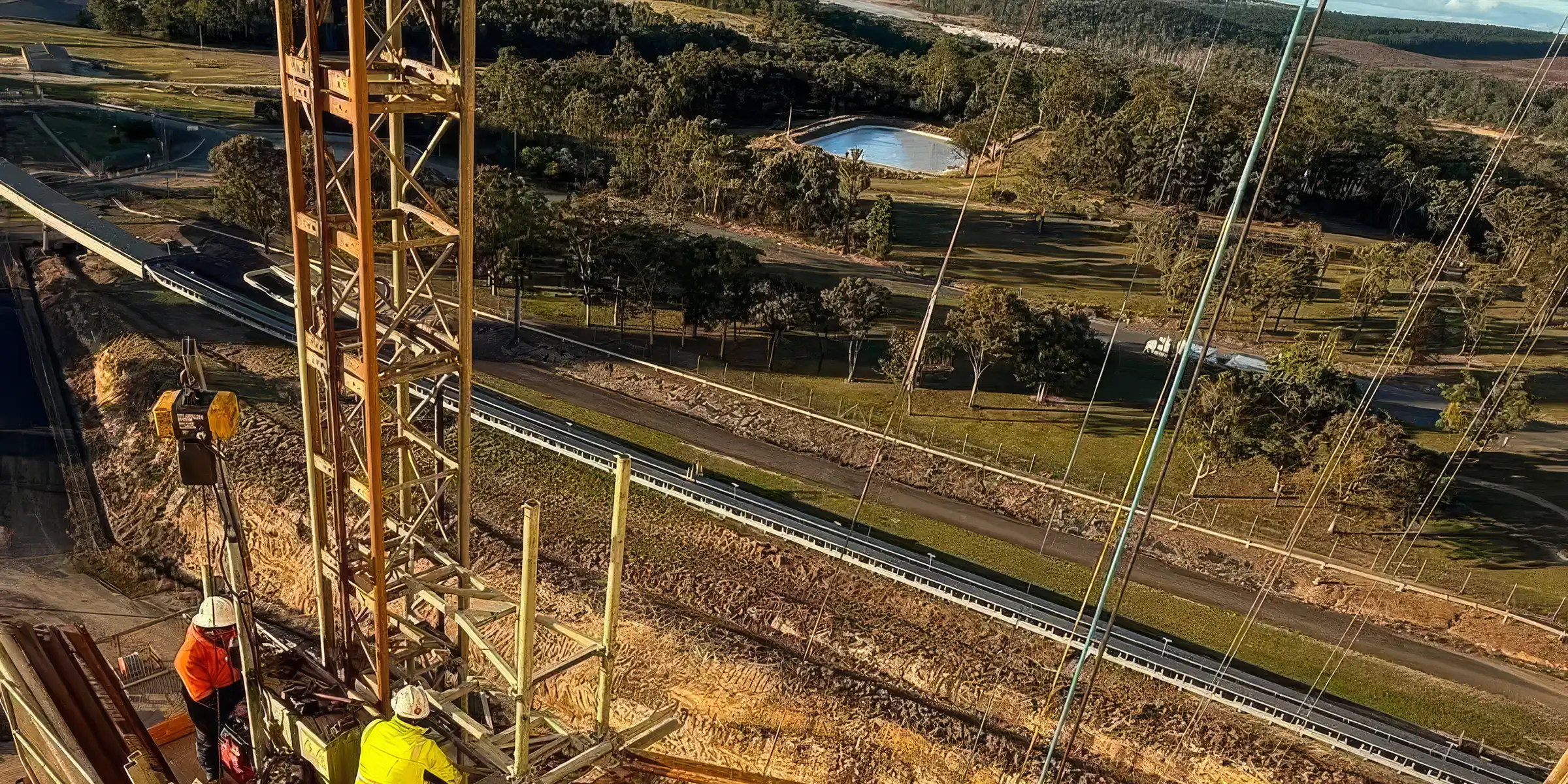
The scaffold that rope made possible. On a Queensland power station, the cooling towers' curved, tapering shells meant a conventional scaffold could not be built up from the ground. Technicians on rope established the anchors, installed the swing stage, and built the scaffold sections a scaffolding crew could not safely reach. Rope access did not replace the scaffold, the hoist or the cranes on that job. It is what made them buildable.
The deadline nothing else could meet. When a lift contractor needed emergency rigging support inside a lift shaft, on a weekend, on 24 hours notice, there was no method conversation to have. No scaffold or machine mobilises into a confined shaft in that window. A rope and rigging crew does.
The honest answer.
Most access decisions are not close, and a crew that runs every method can tell you quickly which way yours falls. The ones that are close usually resolve into a hybrid, rope for the scattered work, a platform where the work concentrates. Either way, the useful move is the same: describe the job to someone with no method to defend. Send us the scope and we will tell you which is correct for your building, even when the answer is not us on ropes.
Common questions.
Is rope access as safe as scaffolding?
It is a different system with the same seriousness behind it. Every technician works on two independently anchored lines, a working line and a backup line, under the IRATA training framework, with rescue capability planned before anyone goes over the edge. The honest answer for any method is that safety comes from the operator’s systems and supervision, not from the method itself.
Is rope access cheaper than scaffolding?
For repair, replacement and inspection work above ground level, usually yes, because there is no structure to design, erect, hire and dismantle. For long-duration programmes across whole elevations, scaffold’s productivity can claw the total cost back. We price both ways when a job sits in the overlap and show the client the comparison.
Can the methods be combined on one job?
Yes, and on complex structures they usually are. On the cooling tower access project the rope access crew installed the anchors and the sections a scaffolding crew could not safely reach, and that is what made the ring scaffold, swing stage and hoist possible to build at all.
How quickly can each method start?
Rope access is the fastest to mobilise: a crew, anchors and a rescue plan, with no structure to build first. Konstruct has mobilised on 24 hours notice for emergency work. Scaffold needs design, erection and often a licence for the ground it occupies before the first trade touches the wall. An EWP sits in between, governed by plant availability and whether the ground position is workable.