
What we do.
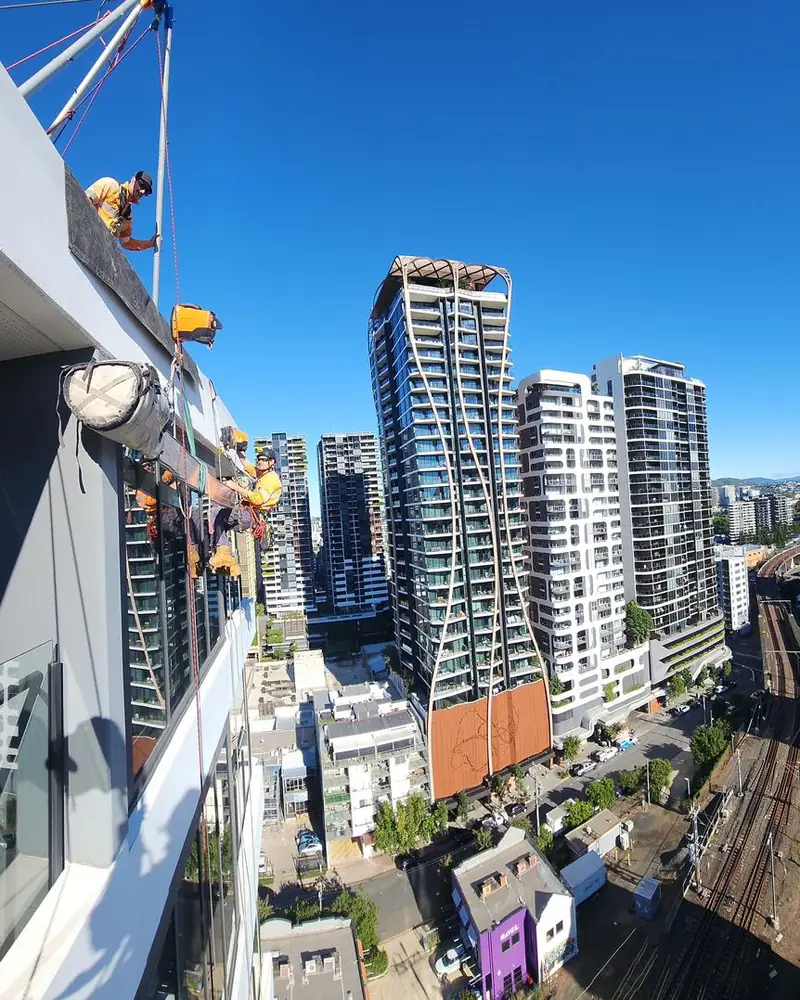
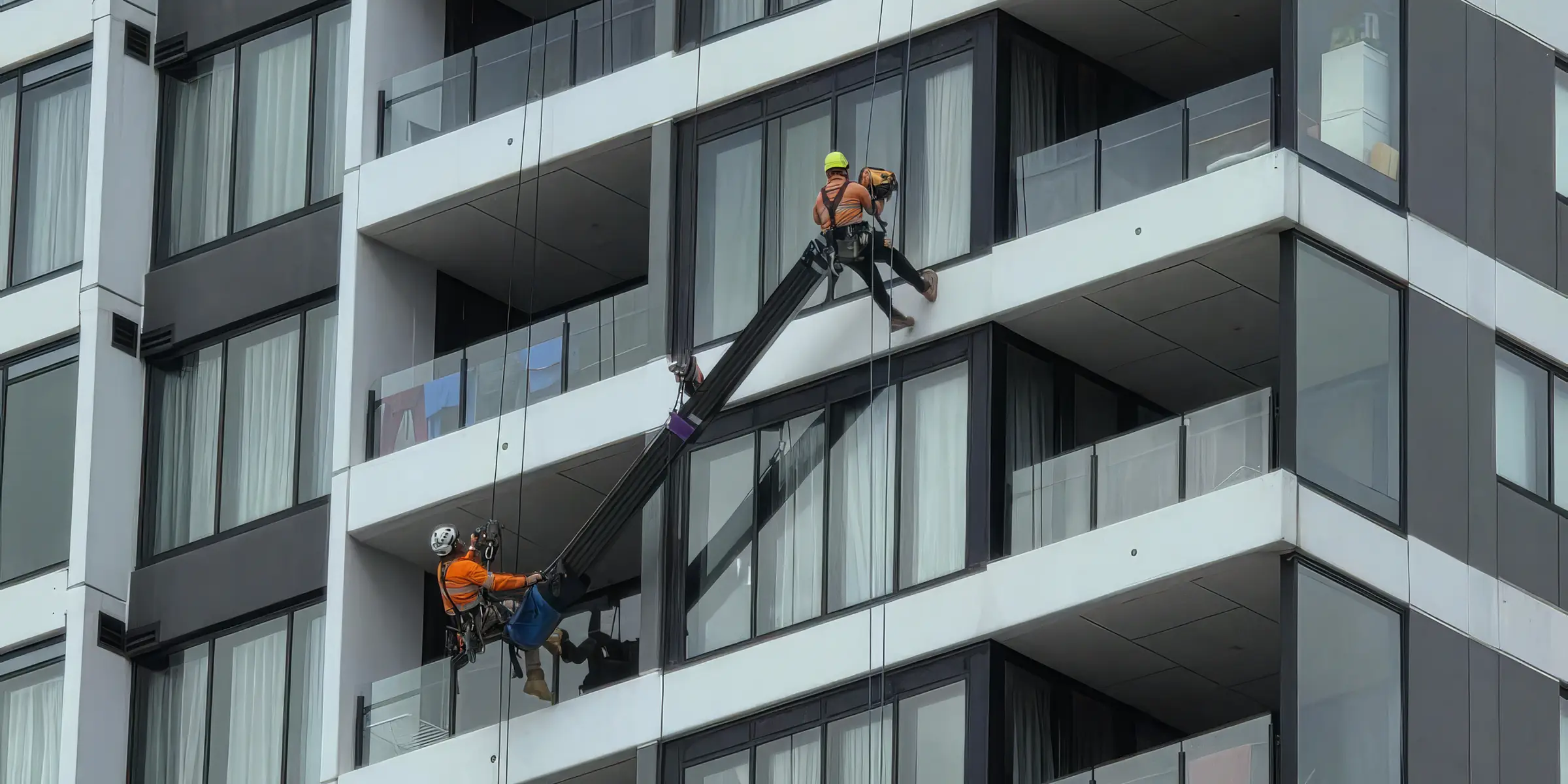
Façade, height safety, and roof inspections delivered on rope access. Photographic reporting that documents what was seen, ranked by severity, with recommended remediation scope and clear scope boundaries on what we did and didn’t certify.
Inspection types.
Façade condition
Glazing, cladding, sealants, concrete, all assessed across the full envelope. Defects flagged and ranked.
Height safety systems
Anchor points, static lines, fall arrest systems: inspection and certification under our height safety service.
Roof inspection
Roof surfaces, parapets, expansion joints, drainage. Often the source of leaks that look like they’re from elsewhere. Pairs with water leak detection.
What the report includes.
- Photographic record of inspected surfaces
- Defects flagged with severity ranking
- Recommended remediation scope
- Summary suitable for insurance, strata, or QBCC compliance
- Clear scope boundaries: what we inspected, what we didn’t, and why
Common questions.
What kind of report do I actually get?
A photographic record of the inspected surfaces, observed defects flagged and ranked by severity, recommended remediation scope, and a summary suitable for handover to insurance, strata committee, or QBCC compliance use. Plain English, no padding.
Are you certified to do compliance reporting?
For QBCC-licensed work, yes. For specific structural or fire-safety certification we work alongside the relevant engineer. We don’t certify outside our scope, and we say where the boundary is in every report.
How long does a typical inspection take?
Depends on the building. A single elevation on a mid-rise might be a half-day; full envelope inspection on a high-rise tower is typically one to three days. Reporting is usually delivered within a week.