
When a building starts letting water in, dropping sealant or showing cracks, the instinct is to ask for a repair price. The honest first step is smaller than that: get close enough to the façade to know what is actually wrong. That is the inspection, and on high-rise buildings it is where remediation succeeds or fails.
The clearest example we can offer is a Brisbane tower that had leaked for more than twenty years. The conventional fix was to remove windows and rebuild the waterproofing from scratch. Close inspection and a façade engineer's targeted specification produced a different answer: inject the concrete cracks and repair the windows where they actually failed. The leak was fully resolved at a fraction of the cost, and the approach saved the owners tens of thousands of dollars against the rebuild.
Why inspect before you repair.
Water and deterioration rarely show themselves where they enter. A stain on a ceiling can trace back to a joint several floors up; a damp carpet can start at a coping the occupant has never seen. Without a close inspection, a repair quote has to price the worst case, and the worst case on a high-rise façade is expensive. An engineer can only specify a repair to what is known, so the quality of the inspection sets the ceiling on how targeted, and how affordable, the remediation can be.
What the inspection covers.
On a typical remediation inspection the crew works through:
- Sealant joints. Condition, adhesion and the points where the joint has genuinely failed rather than merely aged.
- Concrete. Cracking, spalling and the condition of patches and previous repairs.
- Glazing. Failed insulated glass units, seals and gaskets, and panes that are a safety concern.
- Cladding. Panel condition and the fixings behind them.
- Waterproofing details. Flashings, copings and the junctions where systems meet, which is where most ingress starts.
- Water testing. Where ingress is suspected, controlled testing to confirm the actual entry point rather than the assumed one. This is its own discipline; see water leak detection.
Why it happens on rope.
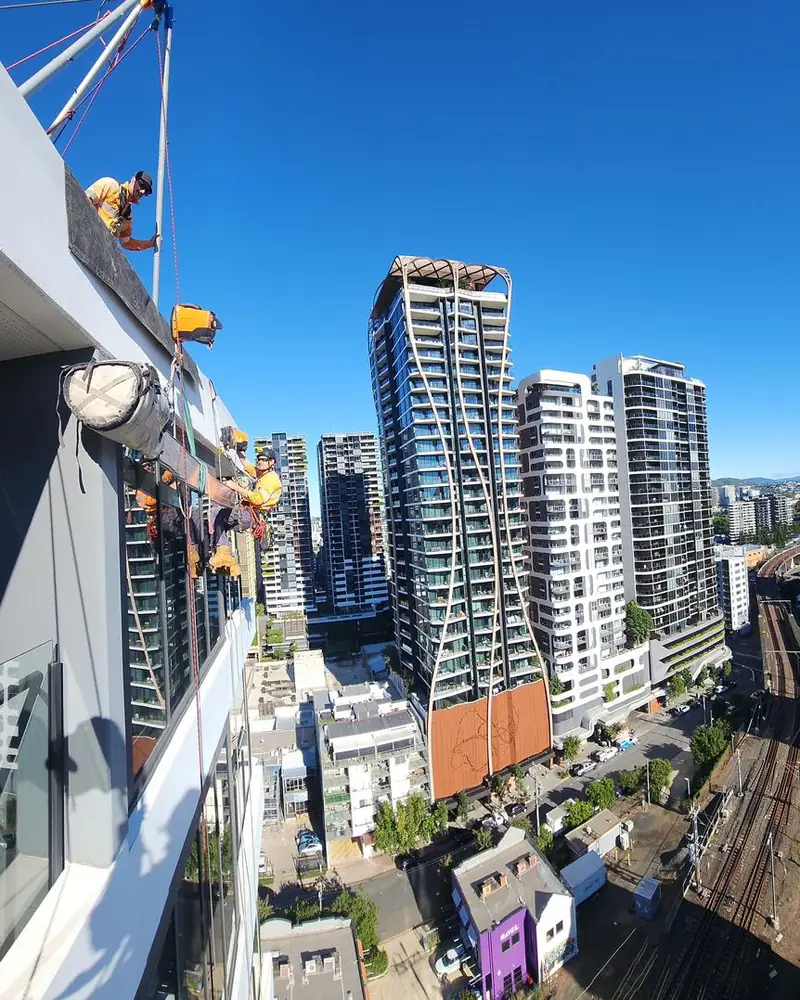
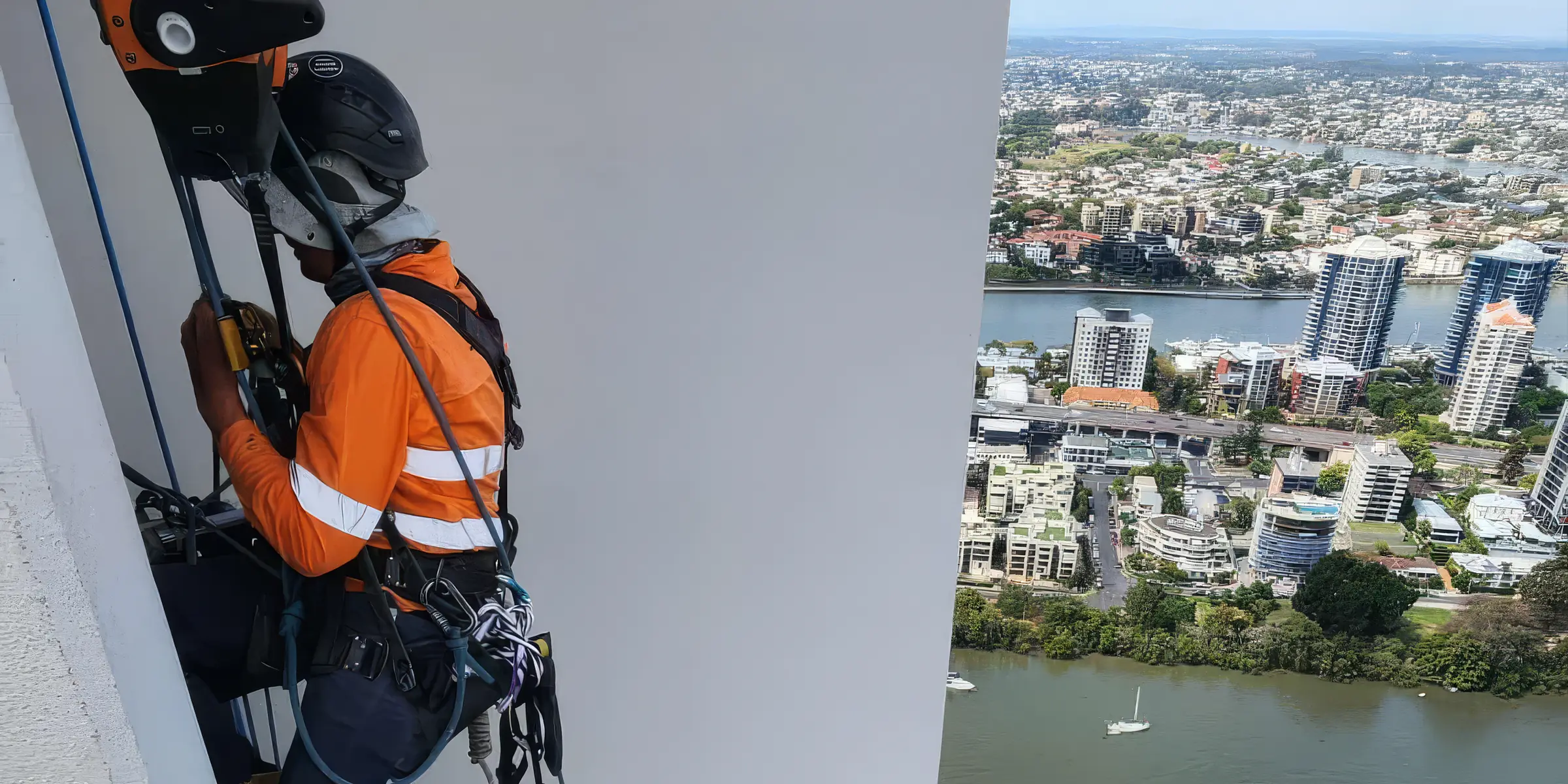
From the ground, or a photograph, you can see a defect. On rope you can touch it: sound the concrete, probe the joint, test the pane, and mark the exact location for the report. A rope access crew reaches every point on an elevation without building anything, which means an occupied tower gets inspected without weeks of scaffold standing over the balconies just so someone can look. That is the difference between an inspection you commission when something fails and one you can afford to commission before it does. The full scope of what we deliver is on the inspections and reports page.
Who does what: the engineer and the access crew.
On serious remediation there are usually two parties on your side of the table. The façade engineer diagnoses and specifies: what is failing, why, and what the repair must achieve. The access crew puts trade-qualified eyes and hands on the defect, executes the specification, and feeds observations back. On the twenty-year leak, that loop is what closed the job out: initial testing showed the repair had resolved most of the ingress, and the crew then worked alongside the engineer refining the remaining details until it was fully resolved. We are not the engineer, and a good access contractor does not pretend to be. What we bring is a documented, first-hand record the engineer can specify from with confidence.
What you get back.
- A photographic report of every defect, located and described.
- Condition notes on the systems inspected, not just the failures.
- Documentation suitable for insurance and compliance use.
- A factual basis for a prioritised repair scope: what needs doing now, what can be programmed, what is cosmetic.
From report to repair.
A good report turns remediation from one large, frightening number into a sequence of targeted ones. Repairs are scoped to the defects that exist, staged in priority order, and tested to confirm they worked before anything is signed off. On the Brisbane tower, the targeted works are now serving as the template for remediating the rest of the building, which is what a well-documented first stage buys you.
When to book one.
- After any water ingress, even if it seems minor or intermittent.
- When cracking, spalling, rust staining or failed sealant is visible from the ground.
- Before major works, refurbishment or sale, so the scope is priced on evidence.
- On a maintenance cycle suited to the building's age and exposure, rather than waiting for a failure to set the schedule.
If your building is showing any of the above, send us what you are seeing, photos from the ground are fine, and we will tell you what an inspection of your building would involve.
Common questions.
Will residents or tenants be disturbed?
Very little. A rope access inspection needs no scaffold, no hoarding and no site compound. The crew rigs from the roof and works down the elevations; for most occupants the whole thing is a technician passing the window. We coordinate timing with building management for anything that needs interior access.
How long does an inspection take?
It scales with the number of elevations and the state of the façade. A targeted inspection of one problem elevation can be done in a day; a full survey of a large tower with water testing takes longer. We confirm the duration when we scope the building, and it is always a fraction of the time a scaffold-based look would need.
Can you fix things during the inspection?
Make-safe work, yes. If the crew finds something that is an immediate risk, loose material, a failing pane, we secure it on the spot rather than photographing it and leaving. Planned repairs are priced properly off the report, so you are quoting from evidence instead of a guess.
What does a façade inspection cost?
The honest drivers are the number of elevations, how the building rigs (anchor availability), and whether water testing is included. We quote after seeing the building. As the twenty-year leak job shows, the inspection is routinely the cheapest line in the whole remediation, and it is the one that stops you paying to repair the wrong thing.